

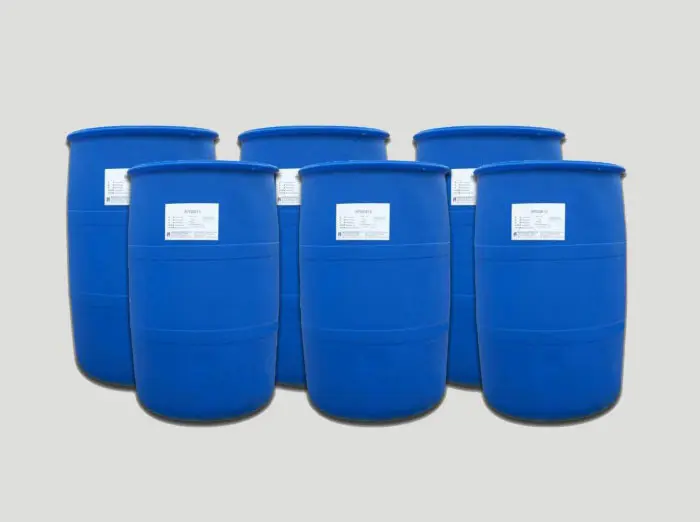
Against the backdrop of increasingly urgent global ecological and environmental issues, the "green transformation" of the daily chemical industry has moved from conceptual advocacy to substantive implementation. As a "bio-friendly player" in the Surfactant field, the biodegradability of Alkyl polyglucoside (APG) is regarded as a core advantage not merely because of a simple "easily decomposable" label—behind it lies a sophisticated adaptation mechanism from molecular structure to ecological cycle, which is a vivid footnote to the combination of nature's wisdom and human green technology. This degradation characteristic not only redefines the environmental boundary of "cleaning," but also fundamentally resolves the long-term burden of traditional petrochemical-based Surfactants on ecosystems.
I. Molecular Structure: A "Biodegradable Blueprint" Encoded by Nature
The biodegradation advantage of Alkyl polyglucoside first stems from the "innate adaptability" of its molecular structure. As a non-ionic surfactant formed by condensation of glucose units and fatty alcohol via glycosidic bonds, its molecular skeleton contains clear "bio-recognition signals": the glucose part is a carbohydrate metabolic substrate common to humans and microorganisms, while the glycosidic bond is a widely existing "switch" for energy transfer and matter transformation in nature.
Specifically, the cyclic structure and hydroxyl distribution of glucose units precisely match the "active pockets" of hydrolytic enzymes secreted by microorganisms—these enzymes act like precise molecular scissors that quickly identify and cut the glycosidic bonds, disassembling long-chain molecules into short-chain oligosaccharides and fatty alcohol fragments. The specificity and efficiency of this enzymatic reaction are unattainable for petrochemical-based surfactants: the latter are mostly composed of artificially synthesized structures such as carbon-carbon single bonds and sulfonic groups, for which microorganisms lack corresponding degradation enzyme systems, often requiring more complex oxidation and reduction steps for gradual decomposition, and some structures may persist long-term as intermediate metabolites.
More crucially, the chain length and branching design of Alkyl Polyglucoside follow the "principle of moderation." The carbon chain length of its fatty alcohol part is typically controlled between 8 and 16 carbons, which ensures the hydrophobicity required for surface activity while avoiding the steric hindrance brought by overly long carbon chains—excessively long chains would increase the difficulty for microorganisms to approach the glycosidic bonds and reduce degradation rates. This synergistic optimization of "structure-function-degradation" enables microorganisms to initiate the decomposition program at the first moment of contact with the molecule, laying a structural foundation for efficient degradation.
II. Degradation Pathway: A Complete Closed Loop from Molecular Disassembly to Ecological Return
The biodegradation of Alkyl Polyglucoside is not a simple "breakdown and disappearance," but a "molecular return journey" following natural metabolic laws, which can be divided into three stages, each reflecting a high degree of friendliness to the ecosystem.
The first stage is "glycosidic bond cleavage and preliminary disassembly." When APG enters water or soil environments, bacteria, fungi, and other microorganisms rapidly secrete glycoside hydrolases to preferentially attack the glycosidic bonds. This stage proceeds extremely fast; in ordinary aqueous solutions at room temperature, long-chain APG can be cut into glucose monomers and short fatty alcohol chains within hours. Glucose, as a "universal energy source" for microorganisms, directly enters the glycolysis pathway to be converted into ATP (cellular energy currency) or to synthesize new biomacromolecules; the short fatty alcohol chains are further decomposed by lipases into fatty acids and glycerol, both of which are common carbon sources for microbial growth.
The second stage is "complete mineralization into inorganic small molecules." The small molecules after preliminary disassembly do not stop metabolizing, but continue to transform under the collaboration of different microbial populations: fatty acids gradually shorten their carbon chains through the β-oxidation pathway, ultimately generating acetyl-CoA, which enters the tricarboxylic acid cycle to be thoroughly oxidized into carbon dioxide and water; glycerol is converted into glucose via gluconeogenesis, or dehydrogenated to pyruvate, and ultimately also mineralized into carbon dioxide and water. The key point of this process is "no accumulation of intermediate toxins"—all metabolites are universally existing inorganic substances or small organic molecules in nature, and will not have toxicity or poor degradability like the degradation intermediates of some petrochemical-based surfactants (e.g., phenol derivatives, halogenated hydrocarbons).
The third stage is "participation in the material cycle of the ecosystem." The carbon dioxide produced by mineralization can be refixed into organic matter through plant photosynthesis, water returns to the water cycle to nourish all things, and the microorganisms utilizing these metabolites to grow and reproduce provide food sources for higher trophic level organisms. This closed loop of "from nature, back to nature" makes the degradation of APG not merely "eliminating pollutants," but a process of "feeding back to the ecosystem," truly maximizing the efficiency of material utilization.
III. Degradation Efficiency: The Environmental Significance Behind Quantitative Data
The quality of biodegradability must be based on scientific data, and APG's performance in this regard is exemplary. According to the international standard OECD 301 series test methods (the gold standard for evaluating rapid biodegradability of compounds), the 28-day biodegradation rate of APG generally exceeds 98%, and some high-purity products can reach over 90% degradation within 14 days. This data far surpasses the degradation level of traditional petrochemical-based surfactants—for example, the common sodium dodecyl benzene sulfonate (LAS), though readily degradable, typically has a 28-day degradation rate of 80%–90% and is significantly affected by environmental factors such as water temperature and pH; whereas APG's degradation rate remains stable in a wide range of 5–35°C and pH 4–10, showing strong adaptability to environmental conditions.
More noteworthy is its "thoroughness." The degradation of traditional surfactants is often accompanied by "incomplete mineralization," where some carbon elements remain in the environment as intermediate metabolites (such as organic acids, alcohols), which may re-polymerize or migrate under specific conditions, causing secondary pollution. In contrast, APG's degradation achieves nearly 100% carbon conversion—isotope labeling experiments trace that all carbon atoms in its molecule are eventually released as carbon dioxide, with no organic carbon residue. This "full mineralization" characteristic means that after using products containing APG, wastewater discharge will not leave a "hidden burden" in water or soil, eliminating the risk of long-term environmental accumulation at the source.
IV. Environmental Friendliness: A Dimension-Reduction Advantage Compared to Traditional Surfactants
To understand the "good" of APG's biodegradability, it needs to be examined in comparison with traditional surfactants. Petrochemical-based surfactants mostly use petroleum derivatives as raw materials; the carbon-carbon bonds and sulfonic groups in their molecular structures are artificially synthesized bond types, for which microorganisms lack corresponding degradation enzyme systems and rely on non-specific oxidases for slow decomposition. This degradation process is not only time-consuming (some varieties take months or even years) but may also produce toxic intermediates—for instance, some chlorinated or nitrogen-containing petrochemical-based surfactants release hydrogen chloride, ammonia nitrogen, and other substances during degradation, causing acute or chronic toxicity to aquatic organisms.
In contrast, the degradation process of APG is like "natural digestion": the microbial enzyme system is "well acquainted" with its molecular structure and can complete decomposition with minimal energy consumption; the metabolites are fully integrated into the ecological cycle without any "metabolic waste" left behind. This difference is directly reflected in environmental impact: in simulated river ecosystems, after discharging wastewater containing APG, the survival rate, enzyme activity, and other indicators of fish, algae, and other organisms show no significant difference from the control group; whereas wastewater containing traditional petrochemical-based surfactants causes inhibition of algal photosynthesis, damage to fish gill cells, and other problems that can last for weeks.
Furthermore, APG's degradation rate is highly synchronized with the metabolic rhythm of microorganisms in natural environments. In natural water bodies, microbial metabolic activities fluctuate diurnally or seasonally with temperature, light, and other factors, while APG's rapid degradation allows it to be quickly decomposed during microbial active periods (e.g., when water temperature is higher during the day), avoiding massive accumulation during low-temperature or dormant periods. This "dynamic adaptation" capability further reduces environmental exposure risks, reflecting the high compatibility between biodegradability and the operational laws of ecosystems.
From the natural encoding of molecular structure, to the ecological closed loop of degradation pathways, and then to the strong support of quantitative data, the biodegradability of alkyl polyglucoside is by no means an accidental "performance advantage," but an "environmental friendliness manifesto" jointly written by natural wisdom and green technology. It not only solves the pain points of traditional surfactants being "hard to degrade and prone to residue," but also provides underlying support for the sustainable development of the daily chemical industry with its "full mineralization, zero burden" characteristic. Today, with "dual carbon" goals and ecological protection becoming global consensus, this degradation capability—derived from nature and returning to nature—may be the optimal solution we are seeking for "cleaning and environmental protection."
Shanghai Chenhua International Trade Co., Ltd.
Address: No. 738, Shangcheng Road, Pudong
New Area, Shanghai
Email: export@yzch.cc
Tel: +86-21-50598997
Mobile: +86-15316808612
Copyright By © Shanghai Chenhua International Trade Co., Ltd. Powered by Yicheng Network
This website uses cookies to ensure you get the best experience on our website.

 Español
 Portugues
 Pусский
 Français
 Deutsch
 日本語
 한국어
 العربية
 Italiano
 Nederlands
 Ελληνικά
 Svenska
 Polski
 ไทย
 Türk dili
 हिन्दी
 Indonesia
 Melayu
 Tiếng Việt
 dansk
 қазақ
 বাংলা
 čeština
 فارسی
 українська
 беларускі
 o'zbek
 Zulu South Africa
 საქართველოს
 中文简体



 Phone
Comment
(0)